
If you run a retail store, you already know how quickly customers make decisions. They walk past, glance at your shopfront, and decide within seconds whether to come in or move on. That brief moment can make or break a sale.
That is exactly why retail signage is so important for your business.
In this guide by Signs N Print, we are going to explain the essential retail signage types that can help your store attract attention and improve the customer experience. So let’s begin
Retail Signage Types at a Glance
Signage Type | Main Purpose | Best Location |
Shopfront Signage | Brand visibility and first impressions | Building exterior and fascia |
Window Signage | Promotions, offers, and new arrivals | Storefront glass and entrance |
Interior Signage | Product info and brand storytelling | Throughout store walls and shelves |
POS Signage | Last-minute impulse purchases | Checkout counters and waiting areas |
Wayfinding Signage | Customer navigation and accessibility | Aisle headers, exits, and floor levels |
Banner Signage | Marketing campaigns and events | Indoor ceilings or outdoor sidewalks |
Vehicle Signage | Mobile brand awareness | Company cars, vans, and trucks |
7 Essential Retail Signage Types Every Store Should Consider
1. Shopfront Signage
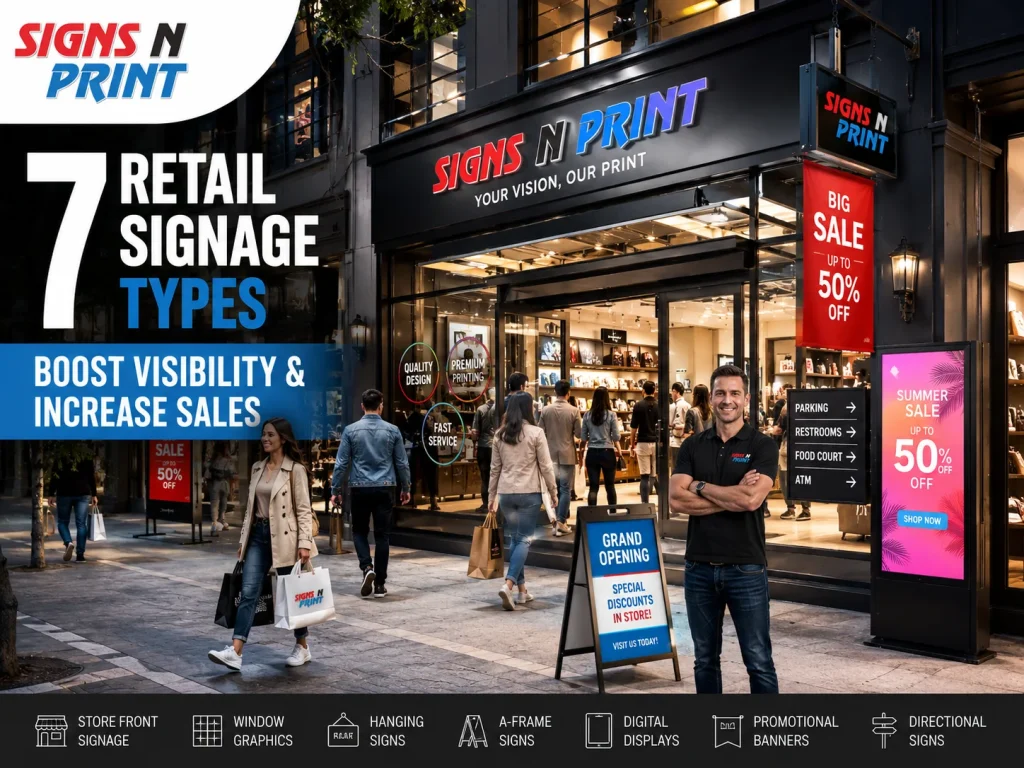
Shopfront signage is the sign people see first. It sits on the outside of your building and tells the public who you are before they even step inside. That first moment counts. A lot. Shopfront signs usually include fascia signs, building markers, and 3D lettering that clearly communicate the business name and nature of the store.
Why does it matter so much? Because first impressions are real. If your front signage looks sharp, people are more likely to assume the store inside is just as well put together. If it is hard to read or feels outdated, that can send the wrong message very quickly.
Shopfront signage also helps people find you from a distance. That sounds simple, but it is one of the main jobs a retail sign has to do. A customer should not have to stop and guess where your store is.
Some of the most common shopfront sign styles include:
- 3D signs for extra depth.
- Illuminated lightboxes for visibility day and night.
- Acrylic lettering for a clean, modern finish.
This type of signage is especially useful for fashion boutiques, cafes, beauty salons, and specialty retailers in busy streets or shopping centres.
2. Window Signage
Window signage turns empty glass into a sales tool.
Instead of letting your windows sit there doing nothing, you can use them to promote sales, new products, opening hours, seasonal offers, and brand messages. Window signage comes in the form of graphics, decals, or digital displays applied directly to the glass storefront. It becomes part of your front-line marketing.
This kind of signage is brilliant for catching passing traffic. People walking by are already looking around. A strong window display can make them pause, look again, and maybe come inside.
So you can use window signage for the following:
- Seasonal promotions.
- Sale and clearance messages.
- Opening hours.
- Core brand messaging.
Furthermore, refresh your window graphics every 6 to 12 months, or sooner if your promotions change. Old graphics can make a store feel stale.
3. Interior Signage
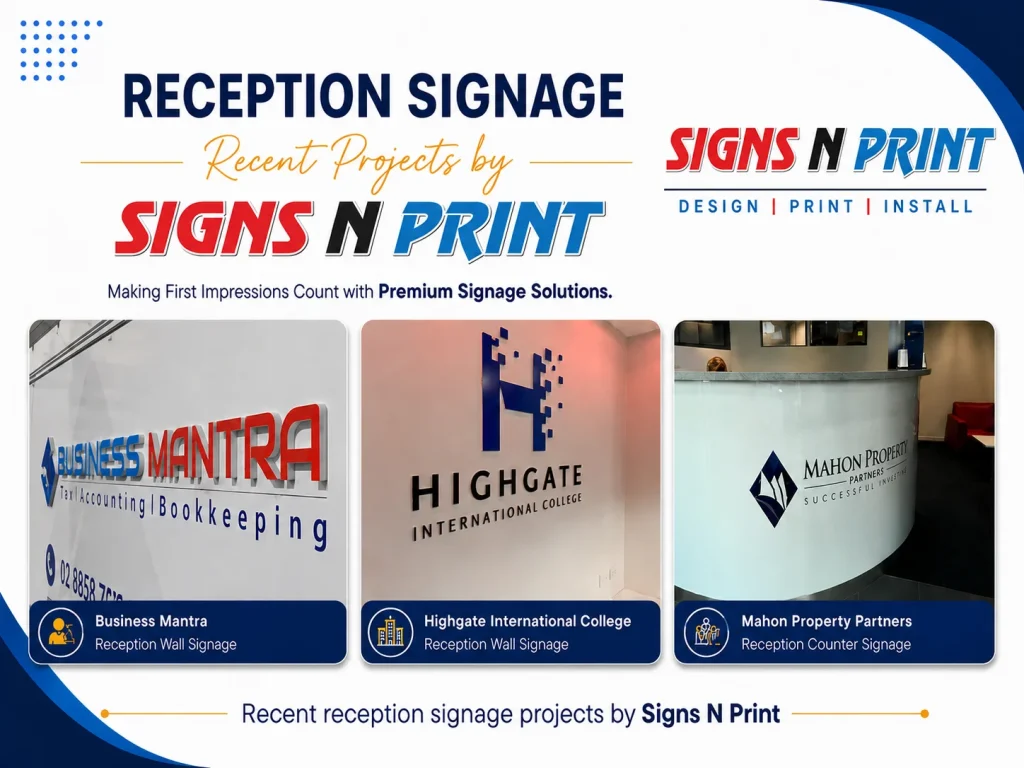
Interior signage covers all the signs inside your store that help people understand the space, find what they need, and feel comfortable while shopping. This can include wall graphics, informational posters, branded decor, department signs, and product information signs.
This is the kind of signage that quietly makes the whole store feel more organised. And customers notice that, even if they do not say it out loud. A neat, well-signposted store feels easier to shop in. It feels more thoughtful. It feels more professional.
Interior signs also help with branding. When your fonts, colours, and visual style stay consistent inside the store, the whole space feels tied together. It is a small detail that can have a big effect.
Common interior signage examples include:
- Department signs.
- Reception signage
- Oversized wall graphics.
- Informational placards.
- Loyalty program or store policy signage.
4. Point-Of-Sale Signage
Point-of-sale signage, or POS signage, is the display material placed near the checkout area or register. It is designed to catch attention at the exact moment customers are making final buying decisions.
This is prime real estate.
Why? By the time a customer reaches the checkout, they are already in buying mode. A small sign, a quick offer, or a neat countertop display can easily lead to an extra item in the basket. POS signage is great for impulse purchases, buy-one-get-one offers, loyalty rewards, and quick add-ons that raise the total transaction value.
POS signage formats include:
- Countertop acrylic holders.
- Promotional cards.
- Shelf wobblers near the register.
The best place for these signs is usually at eye level near checkout lines or in waiting areas where customers have a little time to read the message. If the sign is tucked away or too low, it probably will not do much. Placement matters more than people think.
5. Wayfinding and Directional Signage
Wayfinding signage helps people move through a space without feeling confused.
In retail, a shopper who cannot find what they need may just give up and leave. Nobody wants that. Wayfinding signs help customers locate departments, product categories, exits, toilets, fitting rooms, and service areas with less effort. They can include arrows, aisle markers, hanging plaques, and directory boards.
Wayfinding signage helps in three big ways:
- It reduces frustration.
- It helps customers find products faster.
- It creates a more logical path through the store.
Good navigation does not just help people move around. It can actually help them see more of your stock. So in a way, this signage is not just about convenience. It can also support sales.
6. Banner Signage
Banner signage is often made from vinyl, mesh, or fabric, and it can be used for both long-term branding and short-term campaigns. For retail businesses, that makes them incredibly handy.
You might use a banner for a grand opening, a clearance sale, a product launch, or a trade show. The message can change depending on the season or campaign, which means banners are not locked into one purpose.
Their main advantages you will get with banner signage are:
- They are cost-effective.
- They stand out from a distance.
- They are easy to swap out when the campaign changes.
7. Vehicle Signage
Vehicle signage is basically a moving billboard.
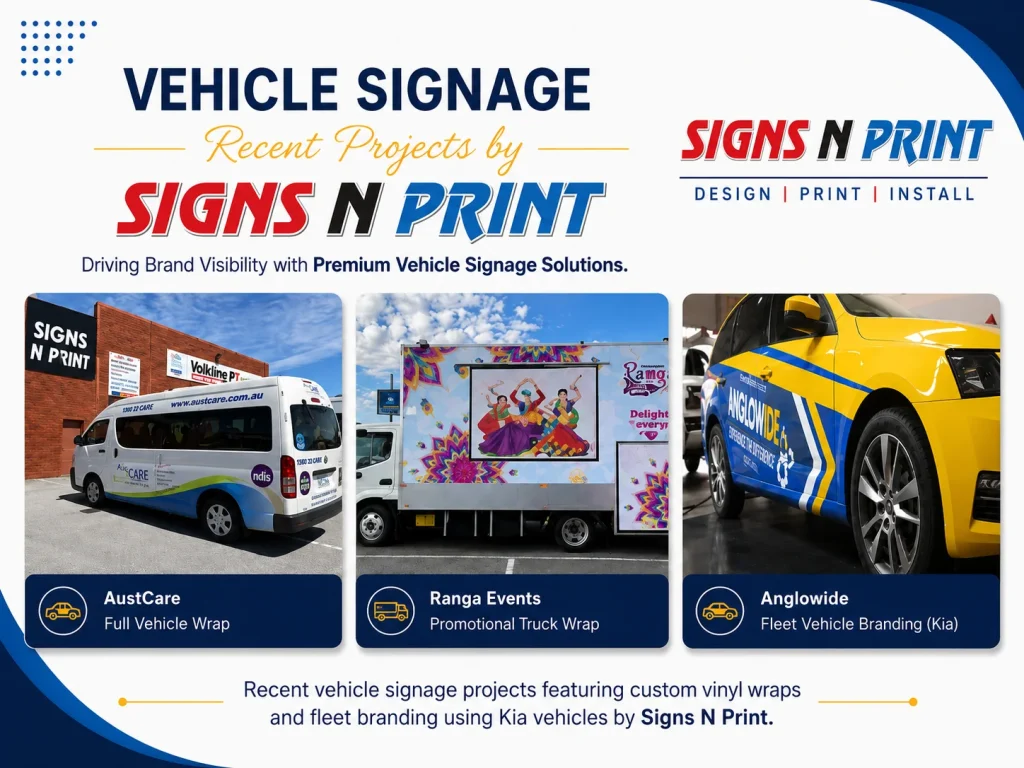
It involves putting branding, contact details, and marketing messages onto cars, vans, or trucks using vinyl wraps. That means your vehicle keeps advertising the business while it is on the road, parked outside a job, or driving through local streets.
This is especially useful for retailers who deliver products or offer off-site services. It helps build awareness in the local area and makes the business look more established at the same time.
Vehicle signage can be simple, but it should still be smart. The design needs to be clean. The logo needs to be easy to read. And the contact details should stand out enough for people to remember them later.
Common vehicle signage options include:
- Vinyl wraps.
- Branded contact details and messaging.
How To Choose The Right Signage For Your Retail Store
Choosing signage is not just about what looks good. It is about what fits your store, your goals, and your customers.
Start with your location. If you are in a busy urban street, you need something bright and highly visible. If you are in a suburban shopping centre, window graphics or digital displays will be best to bring people in from nearby foot traffic.
- If you want brand awareness, go for strong, permanent shopfront signage.
- If you want more immediate sales, focus on banners and POS displays.
- If you want customers to move through the store more easily, make wayfinding and interior signs a priority.
And do not forget about indoor versus outdoor use. Outdoor signs need to stand up to weather, sun, and general wear. Indoor signs can focus more on detail and finish. That difference matters more than many businesses realise.
Common Retail Signage Mistakes To Avoid
Even good signage can fail if the basics are wrong.
Here are the mistakes that you should avoid at all costs:
- Inconsistent branding.
- Poor readability.
- Too much information.
- Wrong placement.
- Outdated promotional signs.
- Low-quality materials.
Make Your Store Stand Out with Professional Retail Signage Solutions by Signs N Print
At Signs N Print, we proudly support Perth retailers with custom signage that attracts attention, builds brand recognition, and improves customer experience.
From storefront impact to in-store engagement, our signage solutions are built to perform in competitive retail environments across Perth.
So, call us now to upgrade your retail signage and boost your store performance.